What to Cook With Hydroponic Lettuce (Beyond Salad)
7 ways to cook lettuce beyond salad: wraps, grilled romaine, stir-fry, soup, braised, frittata, and smoothies. Simple methods for your hydroponic harvest.
In this guide
Lettuce isn’t just for salad. Grill it, wrap it, wilt it into a stir-fry, or blend it into soup, all without turning it bitter or slimy, as long as you match the lettuce type to the method. Here are 7 ways to use a hydroponic head that don’t end in a salad bowl.
The short version
- Romaine and butterhead hold up best to heat; save loose-leaf and iceberg for wraps or quick wilting.
- Lettuce cooks down fast, roughly like spinach, so plan on 8-10 large leaves per recipe.
- Wraps are the easiest starting point: no cooking required, just a sturdy leaf and a filling.
- Lettuce runs about 7 calories per cup raw, so cooked dishes stay light no matter how it's prepared ([Colorado State University Extension](https://extension.colostate.edu/resource/health-benefits-and-safe-handling-of-salad-greens/)).
Which Lettuce Works Best for Each Method?
At a glance: lettuce type by cooking method
| Method | Best lettuce | Why |
|---|---|---|
| Wraps / cups | Butterhead, romaine | Cupped shape, sturdy leaf holds filling without tearing |
| Grilling | Romaine (halved) | Thick center rib survives direct heat |
| Stir-fry / sauteing | Romaine, leaf lettuce | Wilts fast without turning to liquid |
| Soup | Any type | Blends smooth, so leaf shape doesn’t matter |
| Braising | Butterhead, little gem | Holds together as a whole or half head |
| Baking (frittata) | Leaf lettuce, spinach-style greens | Chops finely and blends into eggs |
| Smoothies | Butterhead, green leaf | Mild flavor, doesn’t overpower fruit |
If you’re not growing your own yet, how to grow romaine lettuce hydroponically and the 8 best leafy greens for hydroponics cover setup and variety picks.
7 Ways to Cook Lettuce
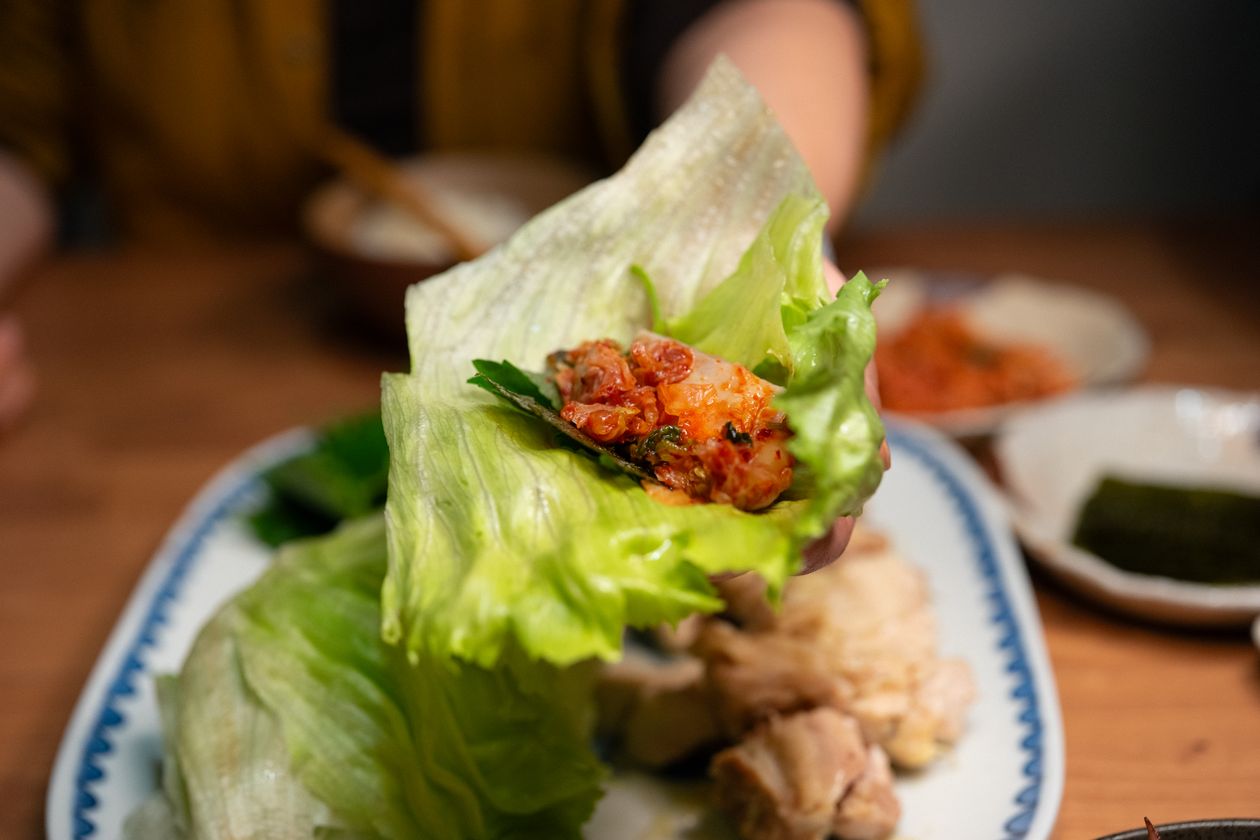
1. Lettuce Wraps (No Cooking Required)
The easiest entry point. Butterhead and romaine leaves are cupped enough to hold a filling without tearing.
- Pick your filling. Ground chicken or beef with soy sauce and ginger, leftover rice and veggies, or seasoned tofu all work.
- Separate whole leaves. Rinse and pat dry so the filling doesn't slide out.
- Fill and fold. Spoon 2-3 tablespoons into the center of each leaf, then fold like a taco.
Why this matters: a sturdy leaf is the difference between a wrap and a mess. Skip loose-leaf and iceberg here, they tear too easily.
2. Grilled Romaine
Direct heat chars the outer leaves while the thick rib stays crisp, a texture salad alone never gives you.
- Halve the head lengthwise. Keep the root end intact so the leaves stay together on the grill.
- Brush with oil. Olive oil, cut side down, medium-high heat.
- Char for 2-3 minutes. You want visible grill marks, not a fully wilted leaf.
Finish with lemon juice, shaved parmesan, or a light vinaigrette while it’s still warm.
3. Stir-Fried Lettuce
A staple in Chinese home cooking, and one of the fastest ways to use a head that’s getting past its prime.
- Heat oil until shimmering. A wok or wide skillet, high heat.
- Add garlic first. 30 seconds, until fragrant, before the lettuce goes in.
- Toss lettuce for 60-90 seconds. Add a splash of soy sauce or oyster sauce. Pull it off the heat as soon as it wilts, it turns watery if you leave it too long.
4. Lettuce Soup
Blended lettuce soup tastes closer to pea or spinach soup than anything “salad-like,” and it’s a good way to use a head all at once.
- Sweat onion and garlic. Butter or oil, low heat, 5 minutes.
- Add chopped lettuce and stock. One head, roughly chopped, plus 3 cups vegetable or chicken stock. Simmer 8-10 minutes.
- Blend until smooth. Add a splash of cream if you want it richer. Season with salt and pepper.
French cooks pair this with fresh peas (potage de laitue). Any lettuce variety works since the leaf shape disappears once blended.
5. Braised Lettuce
Butter-braised lettuce, classically served with peas, is a French bistro side that most home cooks skip because they don’t think of lettuce as a cooked vegetable.
- Halve small heads. Little gem or butterhead, root end intact.
- Braise in butter and stock. Cut side down, 1/4 cup stock, covered, medium-low heat, 8-10 minutes.
- Finish uncovered. 2-3 minutes to reduce the liquid to a light glaze.
6. Lettuce Frittata
Chopped lettuce cooks into eggs the same way spinach does, wilting down into the mixture instead of staying crunchy.
- Whisk 6 eggs with salt, pepper, and a splash of milk.
- Wilt chopped lettuce in the same pan for 1-2 minutes before adding the eggs.
- Cook low and slow. Cover, low heat, 8-10 minutes, until just set.
This is loosely based on kuku sabzi, a Persian herb frittata that traditionally uses whatever leafy greens and herbs are on hand.
7. Lettuce Smoothies
Butterhead and green leaf lettuce are mild enough to blend into a fruit smoothie without the bitter edge that kale or spinach can bring.
- Add 1-2 cups lettuce to the blender first, under the liquid.
- Add fruit and liquid. Banana, mango, or berries mask the lettuce flavor completely.
- Blend until smooth. No chunks of leaf should remain.
How Much Nutrition Are You Actually Getting?
Lettuce is mostly water, so it’s never going to be a calorie or protein source, at roughly 7 calories per cup (Colorado State University Extension). What it does bring: vitamin A, vitamin C, folate, and calcium, all of which survive cooking reasonably well. Romaine tests highest for vitamin A of the common lettuce types, at 8,710 IU per serving in the same CSU data, which is one more reason it’s the variety recommended above for grilling and stir-frying. Cooking it in a little oil or butter, as in the grilled, sauteed, and braised recipes above, actually helps your body absorb more of that fat-soluble vitamin A than eating it raw: carotenoid absorption needs dietary fat, and just 3-5 grams is enough to make a real difference (Linus Pauling Institute, Oregon State University).
If you’d rather keep things simple and raw, 11 refreshing summer recipes using hydroponic herbs sticks to no-cook prep. And once you’ve got a rhythm going with lettuce, 5 best hydroponic pesto recipes is a good next stop for using up a heavy herb harvest.
Sources (2)
-
Colorado State University Extension. “Health Benefits and Safe Handling of Salad Greens.” https://extension.colostate.edu/resource/health-benefits-and-safe-handling-of-salad-greens/ retrieved 2026-07-28
-
Linus Pauling Institute, Oregon State University. “Carotenoids.” Micronutrient Information Center. https://lpi.oregonstate.edu/mic/dietary-factors/phytochemicals/carotenoids retrieved 2026-07-28